Most of us don’t think twice about getting our eyes checked.
If the letters on a screen look blurry, we book an eye exam. If our glasses stop feeling right, we get our prescription checked.
Hearing is a little different.
People often notice a hearing problem only after they’ve spent months asking others to repeat themselves, increasing the TV volume, or struggling to follow conversations in noisy places. That’s why Regular Hearing Checkups deserve the same kind of attention we give to our eyesight.
At KK Hearing Aid Centre, we often meet people who say, “I didn’t realise my hearing had changed. I just thought everyone was speaking too softly.”
Hearing Loss Can Happen Slowly
One reason hearing problems are easy to miss is that they don’t always appear suddenly.
You may not wake up one morning and realise you’ve lost your hearing.
Instead, small things start changing.
You ask your family to repeat themselves.
The television gets a little louder.
You find restaurants harder to manage.
You start relying more on watching people’s faces when they speak.
Because the changes happen gradually, you can get used to them without realising it.
Why Do Eye Exams Feel More Normal?
There’s an interesting difference in how we treat our eyes and ears.
People commonly have their eyesight checked even when they can still see reasonably well. They want to know whether their prescription has changed.
With hearing, many people wait until communication becomes genuinely difficult.
There’s no real need to wait that long.
A hearing check can tell you what’s happening before the problem starts interfering heavily with everyday conversations.
A Hearing Test Doesn’t Mean You Need a Hearing Aid
This is an important point.
Some people avoid hearing tests because they think the result will automatically lead to hearing aids.
It doesn’t.
A hearing assessment simply gives you information about your hearing.
You may have normal hearing.
You may have a small amount of hearing loss that only needs monitoring.
Or you may have hearing loss that would benefit from treatment.
Knowing where you stand is useful either way.
Sometimes Family Members Notice First
This happens quite often.
A person may genuinely feel that their hearing is fine.
Meanwhile, their family keeps saying:
“You’re not listening.”
“The TV is too loud.”
“I’ve already told you that.”
It can become frustrating on both sides.
Sometimes the person isn’t ignoring anyone at all.
They simply didn’t hear the words clearly.
A hearing assessment can help separate a communication problem from a hearing problem.
Who Should Consider Regular Hearing Checks?
Anyone who notices changes in their hearing should consider getting tested.
This is especially relevant if you:
- Frequently ask people to repeat themselves
- Struggle to understand speech in noisy places
- Keep increasing the television volume
- Have difficulty hearing on the phone
- Notice ringing or other sounds in your ears
- Feel that one ear hears differently from the other
- Have been exposed to loud noise regularly
You don’t need to wait until hearing becomes severely difficult.
Hearing Checks Can Help Track Changes
One hearing test gives you a picture of your hearing at that particular time.
Having your hearing checked periodically gives you something to compare it with.
If your hearing changes, it can be noticed and discussed earlier.
This can be particularly useful as we get older, because gradual hearing changes can otherwise go unnoticed for quite some time.
That’s another reason Regular Hearing Checkups are worth making part of your overall health routine.
What Happens During a Hearing Check?
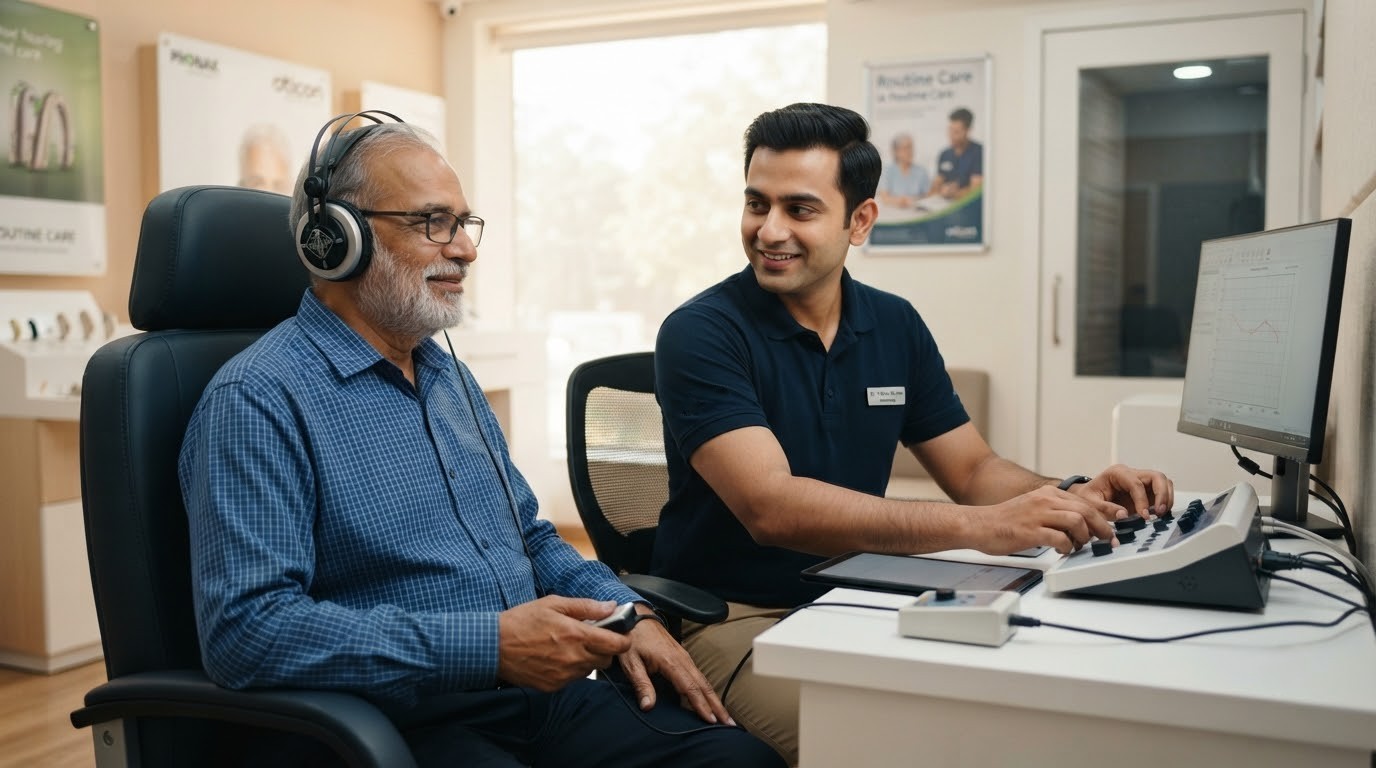
The process is generally straightforward.
A hearing care professional will first ask about your hearing and any difficulties you’ve noticed.
Your ears may be examined, and your hearing may be tested using different tones and speech sounds.
The results help show how well you’re hearing different frequencies and how well you understand speech.
If a hearing problem is found, the next steps can be discussed based on your individual situation.
Don’t Wait for Someone Else to Point It Out
Many people only get their hearing tested after a spouse, child, or friend repeatedly tells them they aren’t hearing properly.
You don’t have to wait for that.
If you’ve noticed that conversations don’t feel as easy as they once did, that’s enough reason to have your hearing checked.
There is no harm in knowing.
Final Thoughts
We make time for eye exams because we understand that vision can change.
Our hearing deserves similar attention.
Regular Hearing Checkups can help you keep track of changes, understand your hearing better, and address problems before they begin affecting more parts of your daily life.
A hearing test isn’t about assuming something is wrong.
It’s simply about knowing where you stand.
Visit KK Hearing Aid Centre
If you’ve noticed changes in your hearing or simply want to understand your current hearing levels, consider booking a professional hearing assessment at KK Hearing Aid Centre.
Taking care of your hearing doesn’t have to wait until conversations become difficult.
Sometimes, a simple check is all it takes to know whether everything is still on track.